On this page
- Fan-based vs digital, side by side
- How to choose a white noise machine in five steps
- White noise machine vs a fan, an app or earplugs
- Does a white noise machine actually help you sleep?
- How masking works
- The case for a fan-based machine
- The case for a digital machine
- How loud should a white noise machine be?
- White noise for babies
- Can you get used to sleeping with white noise?
- When noise isn’t the real problem
- Common questions
The short answer Fan-based machines make sound mechanically, with a real spinning fan, so they never loop but offer few sound choices. Digital machines play recorded or generated audio, so they offer many sounds but cheaper ones can repeat audibly. For sleep, prioritize a volume that goes low, a sound you like, no bright light, and keeping it at a level well below normal conversation.
Neither type is better across the board. The right pick depends on what you’re trying to cover up, how picky your ears are, and whether anyone else sleeps in the room. Start with the checklist, then the details below.
- Fine volume control that goes genuinely quiet, so you can set the lowest level that works
- A sound without an audible loop or click (test it in a quiet room before the return window closes)
- More than plain white noise: pink, brown or fan sounds are often easier to listen to all night
- No indicator light, or one you can switch off
- Continuous play all night, plus an optional timer
- Plug-in power or a long battery life if you’ll travel with it
- For a baby’s room: low maximum volume and room to place it well away from the crib
Fan-based vs digital, side by side
| Fan-based | Digital | |
|---|---|---|
| How it makes sound | A small fan moves air inside a housing; you adjust tone by opening or closing vents or changing speed | A speaker plays stored recordings or generated noise |
| Looping | None; the sound is produced live | Possible on cheaper models with short recordings |
| Sound choices | One type of “whoosh,” with tone and volume tweaks | Often several colors of noise plus fan, rain, waves |
| Lowest volume | Can’t always go very quiet | Usually adjustable in small steps |
| Size and travel | Bulkier; usually needs an outlet | Often small; many run on batteries or USB |
| Best for | People bothered by any hint of repetition; a steady, familiar fan sound | People who want choice, deeper sounds or a travel unit |
How to choose a white noise machine in five steps
- Name the noise you’re covering. Sudden, mid-pitched sounds like voices, doors, a dog or a cough are what masking handles best. Low rumbles such as traffic, bass or a snoring partner need a deeper sound (brown or fan noise) or earplugs, and sometimes both.
- Pick the sound before the machine. Try white, pink, brown and fan sounds on a free phone app for a few nights. Once you know which one you can sleep through, buy a machine that does that sound well rather than one with 30 sounds you’ll never use.
- Check the bottom of the volume range. You want the quietest setting that still covers the noise, so a machine whose lowest step is already loud is the wrong machine. Measured at the pillow, it should sit comfortably below the 60 to 70 dBA of normal conversation (more on that below).
- Listen for loops, then look for light. In a quiet room, listen for two minutes for a repeat or a click. Then turn the lights off and look for an indicator LED. If you’re sensitive to light, a glowing dot can undo the point of the machine; tape over it or pair the machine with a mask, and see how to choose a sleep mask for fit.
- Match the power to where you sleep. A plug-in unit suits a bedroom that never changes. If you travel or split nights between two places, battery or USB power and a small footprint matter more than extra sounds. Keep the receipt until you’ve slept with it for a couple of weeks.
White noise machine vs a fan, an app or earplugs
A machine isn’t the only way to get steady sound or quiet. Here’s how the usual alternatives compare.
| Option | Good at | Weak spots |
|---|---|---|
| White noise machine | Steady masking all night, simple controls, no phone in the bedroom | One more device; cheap units can loop or glow |
| Box or tower fan | A broadband whoosh plus cooling if you sleep hot | Blows cold air in winter; often can’t go very quiet |
| Phone app | A free way to test sounds before buying; easy to pack | Notifications and screen light unless you silence them; small speaker; battery drain |
| Earplugs | Turning noise down rather than covering it, including low rumbles | You may not hear an alarm or a child; some people find them uncomfortable |
| Earplugs plus a machine | Loud or unpredictable rooms, like a city street or a snoring partner | Most to manage; make sure you can still hear a smoke alarm |
Our comparison of foam, silicone and wax earplugs covers which type seals best. If heat is part of the problem, a fan may solve two things at once; see the hot sleeper guide.
Does a white noise machine actually help you sleep?
Sometimes, for some people, and the evidence is weaker than the marketing. A 2021 systematic review of 38 studies found results all over the place, from continuous noise improving sleep to disrupting it, and rated the overall evidence very low quality. The authors warned that noise might also affect sleep and hearing negatively.
There are encouraging individual studies. In a small trial of 18 healthy adults sent to bed 90 minutes early to mimic a bad night, quiet broadband sound at about 46 decibels cut the time to fall asleep by a median of 38% compared with normal room noise. That’s a lab setup with young, healthy sleepers, so it doesn’t tell you how a machine will work in your bedroom for months.
How masking works
Noise wakes you mostly through sudden change, not sheer loudness. In a sleep-lab study, recorded hospital noise more than tripled the number of brief arousals from sleep. Adding white noise on top brought them back near baseline, because the jump from background to peak noise, not the peak level itself, predicted whether someone woke. Only five people took part, but the idea is sound: a steady floor of sound makes a car door or a cough stand out less.
That also tells you when a machine won’t help much. Low rumbles, like a neighbor’s bass or a truck idling, are hard to cover with hiss. Deeper sounds such as brown noise do better there, and earplugs may do better still. Our guide to white, pink and brown noise explains the differences.
The case for a fan-based machine
The sound is real moving air, so there’s nothing to loop. Some people find that matters a lot; once you’ve noticed a repeating pattern in a recording, it’s hard to un-hear it at 2 am. Fan machines also tend to be simple, with no screen or app.
The downsides: one basic sound, a bit of bulk, and a minimum volume that may still be louder than you want for a quiet bedroom. And yes, a regular room fan does much the same job, with the bonus of moving air if you sleep hot.
The case for a digital machine
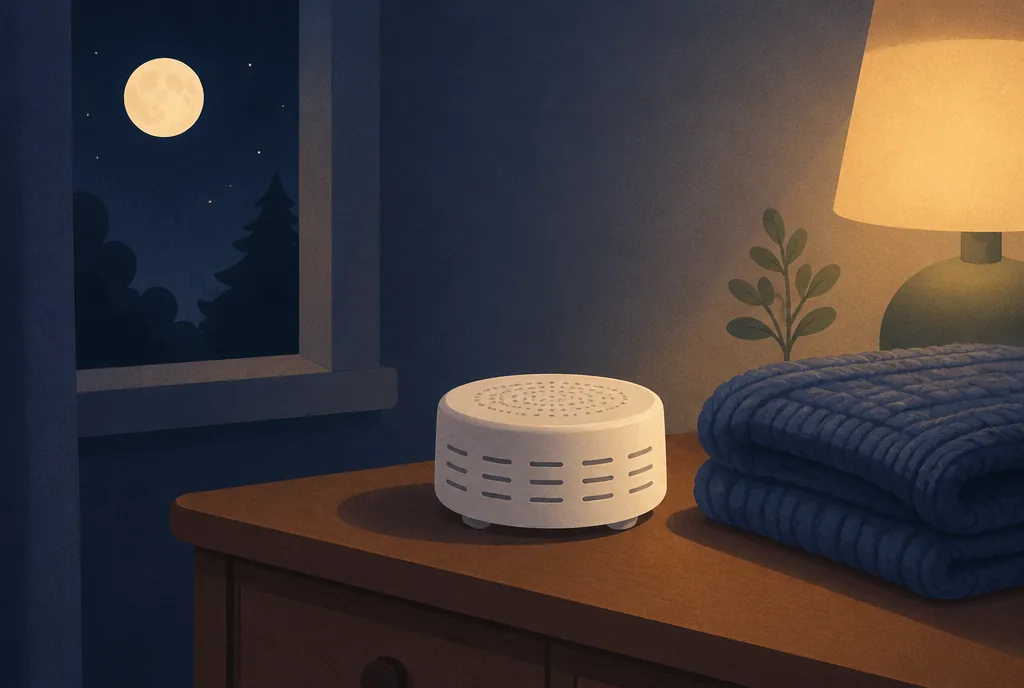
Variety is the draw. Many digital units offer pink and brown noise, which have more low-frequency energy and sound softer than white noise, along with fan and nature recordings. Volume often goes lower and adjusts in finer steps. Small, battery-powered models are easy to pack for hotels.
Quality varies more here. Cheaper units may use short recordings that loop, cheap speakers that sound tinny, or bright displays. Listen closely for a minute or two in a quiet room; if you can hear a repeat, it will bug you eventually.
Before buying anything, try a free noise app on your phone for a week, face down and on airplane mode or do-not-disturb. If you sleep better, a machine is worth it. If not, you’ve saved the money.
How loud should a white noise machine be?
As quiet as still does the job. The National Institute on Deafness and Other Communication Disorders says sounds at or below 70 dBA are unlikely to cause hearing loss even with long exposure, while long or repeated exposure at 85 dBA or more can. Normal conversation runs about 60 to 70 dBA, so a sleep machine should sit comfortably below the volume of people talking.
The quiet broadband sound in the 2017 trial above was only about 46 decibels. If you want a number, NIOSH’s free Sound Level Meter app for iPhone gives a reasonable estimate; measure at your pillow, not at the speaker.
Where to put it
Placement changes what reaches your ears as much as the volume knob does. In our view the best spot is between your bed and the noise, such as on a dresser near the door if the sound comes from a hallway, rather than on the nightstand next to your head. That way the sound can cover the noise at a lower setting. For a baby, the rule is simpler: across the room, never in or on the crib.
White noise for babies
Parents use sound machines widely, and they can help mask household noise. The concern is volume. When researchers tested 14 infant sleep machines at maximum volume, every one exceeded the 50-decibel limit recommended for hospital nurseries at 30 cm (about a foot), and three topped 85 decibels, enough to risk hearing damage over a full night.
The practical rules: put the machine across the room, not in or on the crib, keep the volume low, and never at maximum. If you have questions about a baby’s hearing or sleep, ask your pediatrician.
Can you get used to sleeping with white noise?
Yes, and that cuts both ways. Many people come to depend on it and find silence hard on trips. A small travel unit or an app solves that. If you’d rather not depend on it, try lowering the volume over a few weeks. There’s little research on long-term reliance, so let comfort guide you.
When noise isn’t the real problem
A machine can mask a snoring partner’s sound to a point. If the snoring is loud, with pauses or gasps, the partner may have sleep apnea, and that’s worth a medical evaluation rather than more decibels. Meanwhile, earplugs for a snoring partner and how to sleep next to a snorer cover more options.
And if you’re lying awake in a quiet room because your mind won’t stop, sound can help a little, but how to fall asleep with racing thoughts goes after the cause. Trouble sleeping at least three nights a week for three months is chronic insomnia, and it’s worth talking to a doctor about CBT-I.
For other gear, see Sleep Gear.
Common questions
Is a fan-based or digital white noise machine better?
Neither wins outright. Fan-based machines make a natural, non-looping sound but offer little choice; digital machines offer many sounds and finer volume control, though cheaper ones can loop audibly.
Is it bad to sleep with white noise every night?
For most adults, a machine kept at low volume is fine, though the evidence that it improves sleep is weak. Keep it well below conversation level; sounds at or below 70 dBA are unlikely to harm hearing.
How loud should a white noise machine be for a baby?
Low, and placed across the room rather than near the crib. A study of 14 infant sleep machines found all of them exceeded the 50-decibel hospital nursery limit at maximum volume about a foot away.
Does white noise help you fall asleep faster?
It may for some people. One small lab trial found quiet broadband sound cut the time to fall asleep by a median of 38%, but a 2021 systematic review rated the overall evidence very low quality.
How do you choose a white noise machine?
Work out what noise you need to cover, test sounds on a free app first, and pick a machine that goes quiet enough, doesn't loop, has no bright light and runs on the power you need.
Written and checked by the Sleep Brief editors. We base every article on published research and guidance from medical bodies, and link the sources inline. How we research.
This article is for general education and isn't medical advice. If poor sleep lasts more than a few weeks, or you snore loudly, stop breathing in your sleep or feel sleepy while driving, talk to a doctor.