On this page
The short answer For most adults, a bedroom around 60 to 67°F (15 to 19°C) is the usual recommendation, set by a Cleveland Clinic sleep psychologist. It’s a starting point, not a rule: your bedding, pajamas and humidity matter as much as the thermostat. Babies need a slightly warmer room, and one study of older adults found they slept best between 68 and 77°F.
Here’s what the sources say for different sleepers. The ranges overlap less than you’d expect, so pick your row and adjust from there.
| Who | Suggested room temperature | Source and notes |
|---|---|---|
| Most adults | 60 to 67°F (15 to 19°C) | Cleveland Clinic sleep psychologist; above 70°F is too hot |
| Older adults | 68 to 77°F (20 to 25°C) | One home-monitoring study; sleep efficiency fell as rooms warmed past 77°F |
| Babies | About 61 to 68°F (16 to 20°C) | NHS SIDS guidance; Cleveland Clinic suggests 65 to 70°F |
| Anyone in humid heat | Lower than you think | Humidity adds heat load and disrupts deep and REM sleep |
How to get your bedroom to the right temperature
- Put a cheap thermometer by the bed. The thermostat in the hallway can be several degrees off from the room you sleep in, especially upstairs.
- Cool the room before bed, not at bedtime. Lower the thermostat or run the air conditioner an hour or so before you lie down so the room is already there.
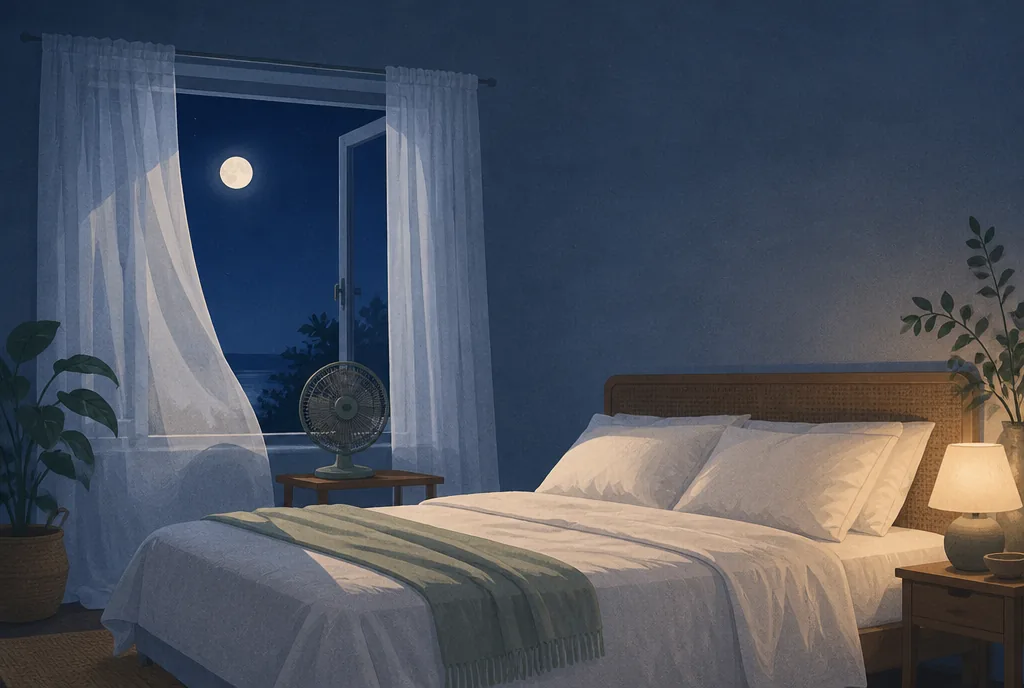
- Run a fan. Moving air helps sweat evaporate, and Cleveland Clinic lists a fan among its first suggestions for a cooler room.
- Match your bedding to the season. Breathable cotton or linen sheets and lighter blankets in summer; layers you can kick off in winter, rather than a hot room.
- Take a warm shower 1 to 2 hours before bed. It sounds backward, but warming your skin helps your core cool down afterward (details below).
- Keep your feet warm if the room is cool. Socks can help in a chilly bedroom.
- Adjust for a week. Move the setting one or two degrees at a time and notice how you sleep, rather than chasing a single perfect number.
Why a cool room helps you sleep
Your body temperature is part of the signal to sleep. Cleveland Clinic explains that core body temperature decreases as part of the sleep initiation process. A warm room fights that drop.
A research review on the thermal environment found that heat or cold exposure typically increases wakefulness and reduces REM and slow-wave (deep) sleep. In real life, with blankets and pajamas, heat is the bigger problem: it raised wakefulness and cut deep and REM sleep. Humid heat was worse still. Cold air, by contrast, didn’t change sleep stages much as long as people had enough bedding, though it did affect heart activity during sleep.
That last point is worth repeating. A cool room with warm covers beats a warm room with light covers.
The American Academy of Sleep Medicine’s own habit list simply says to keep your bedroom at a comfortable, cool temperature, without naming a number.
Is 60°F too cold to sleep?
Not for most adults with normal bedding. It sits at the bottom of the recommended range. If you wake up cold, add a blanket before you raise the heat. Cold hands and feet can keep you awake even when your core is fine, which is where socks come in.
In one small lab study, six young men slept in a cool room with and without bed socks. With socks, they fell asleep about 7.5 minutes faster and slept 32 minutes longer, with fewer awakenings. Six people is a tiny sample, so treat it as a reasonable thing to try, not proof.
Is 72°F too hot to sleep?
For most younger and middle-aged adults, probably a bit warm. Cleveland Clinic’s sleep psychologist says a bedroom above 70°F is too hot. If you sleep fine at 72°F, there’s no need to change anything. If you’re waking up kicking off covers or sweating, that’s your sign.
Best temperature for older adults
Older adults may need it warmer. A 2023 study from Harvard-affiliated researchers tracked older adults in their own homes with wearable sleep monitors and room sensors. Sleep was most efficient and restful between 20 and 25°C (68 to 77°F), and sleep efficiency dropped 5 to 10% as the room warmed from 25 to 30°C (77 to 86°F). The researchers also saw large differences between individuals.
That’s one observational study, so it can’t prove the temperature caused the change. Still, it’s a good reason not to push an older relative’s bedroom down to 60°F. Cleveland Clinic advises older adults to avoid changing the temperature too drastically and to ask a doctor if unsure.
Best room temperature for a baby
For babies, overheating is a safety issue, not just a comfort one. The NHS warns that overheating can increase the risk of SIDS and advises keeping the room between about 16 and 20°C (61 to 68°F), checked with a room thermometer. Cleveland Clinic suggests a slightly warmer 65 to 70°F.
- Use lightweight blankets, sheets or a baby sleeping bag.
- Remove hats and extra layers once you’re indoors.
- Check your baby’s temperature by feeling the chest or the back of the neck. Cool hands and feet are normal.
- If the skin feels hot or sweaty, remove a layer.
Follow your pediatrician’s advice on safe sleep; these are general guidelines, not a substitute.
Summer vs winter
When it’s hot
Humidity makes everything worse, since sweat can’t evaporate. The thermal-environment review found humid heat further increases the heat load during sleep. If you don’t have air conditioning, a fan, the lightest breathable sheets and closing blinds during the day to keep sun out are the main levers. A warm, not hot, shower before bed can still help you shed heat afterward.
When it’s cold
Resist cranking the heat. Keep the room cool and add layers to the bed instead, since bedding protects your sleep stages in a cool room. Warm feet with socks, and dress in breathable layers rather than heavy synthetic fabric that traps sweat.
The warm shower trick
A meta-analysis of 17 studies found that bathing or showering in water around 104 to 109°F (40 to 42.5°C) for as little as 10 minutes, 1 to 2 hours before bed, was linked to falling asleep faster. The warm water sends blood to your hands and feet, which helps your core temperature fall afterward. A shower right before lights-out doesn’t have the same effect, so time it.
Hot flashes or night sweats? MedlinePlus suggests dressing lightly and in layers and avoiding caffeine, alcohol and spicy foods. A cooler room and layered bedding you can shed fast make the most difference.
When temperature isn’t the problem
If you’ve dialed in the room and still wake up drenched, the cause may be inside you rather than the bedroom. Night sweats show up with menopause, some medications, infections and other conditions. Soaking night sweats that happen no matter how cool the room is, especially with fever or weight loss you can’t explain, are worth mentioning to a doctor.
Temperature is one part of the sleep environment. Light and noise matter too; our guide to choosing a sleep mask covers the light side, and the sleep hygiene checklist covers the rest. More bedroom guides are in Bedroom.
Common questions
What is the best room temperature for sleeping in Celsius?
About 15 to 19°C for most adults, which matches the 60 to 67°F range from Cleveland Clinic. For babies, the NHS advises about 16 to 20°C.
Is 68 degrees too warm to sleep?
It's slightly above the usual 60 to 67°F suggestion for adults, but many people sleep well at 68°F. Older adults in one study slept best between 68 and 77°F.
Is it better to sleep in a cold room with blankets?
Generally yes. Research suggests heat disrupts deep and REM sleep more than a cool room does, as long as you have enough bedding to stay comfortable.
What temperature should a baby's room be at night?
The NHS advises about 16 to 20°C (61 to 68°F), checked with a room thermometer, and warns that overheating can raise the risk of SIDS. Ask your pediatrician if you're unsure.
Written and checked by the Sleep Brief editors. We base every article on published research and guidance from medical bodies, and link the sources inline. How we research.
This article is for general education and isn't medical advice. If poor sleep lasts more than a few weeks, or you snore loudly, stop breathing in your sleep or feel sleepy while driving, talk to a doctor.