On this page
- Tonight’s cool-down routine
- Why heat breaks up your sleep
- What’s the best room temperature for a hot sleeper?
- Sheets, comforters and blankets for hot sleepers
- The warm shower trick
- Hot flashes and night sweats
- Hot sleeper vs. cold sleeper sharing a bed
- Why you might be sleeping hotter than usual
- Common questions
The short answer Cool the room first: aim for roughly 60 to 67°F (15 to 19°C), keep air moving with a fan and close the blinds during the day. Then fix the bed: lighter layers you can peel off, breathable sheets such as cotton or linen, and lightweight sleepwear. A warm shower 1 to 2 hours before bed helps your body shed heat on schedule.
Heat is one of the more reliable ways to wreck a night. In studies where people slept with normal bedding, a hot room increased time awake and cut deep sleep and REM sleep, and humid heat made it worse. The good news is that most of the fixes are cheap. Start at the top of this table and work down.
| Fix | What to do | Why it helps | Cost |
|---|---|---|---|
| Room temperature | Set the thermostat to about 60 to 67°F (15 to 19°C) at night | The range a Cleveland Clinic sleep psychologist suggests for adults | Free to low |
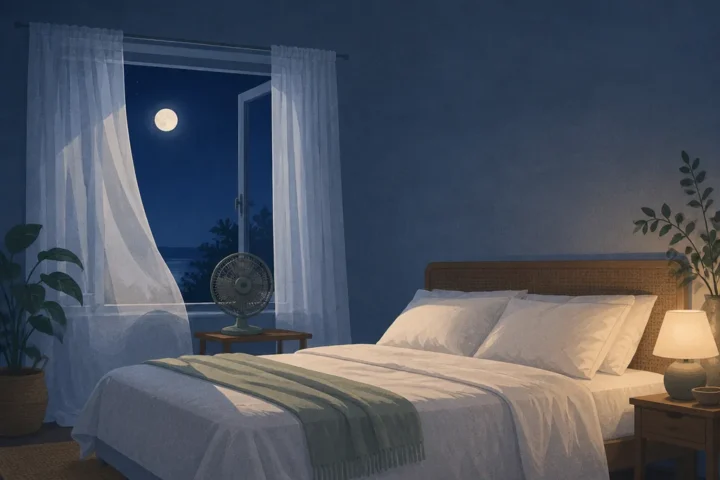
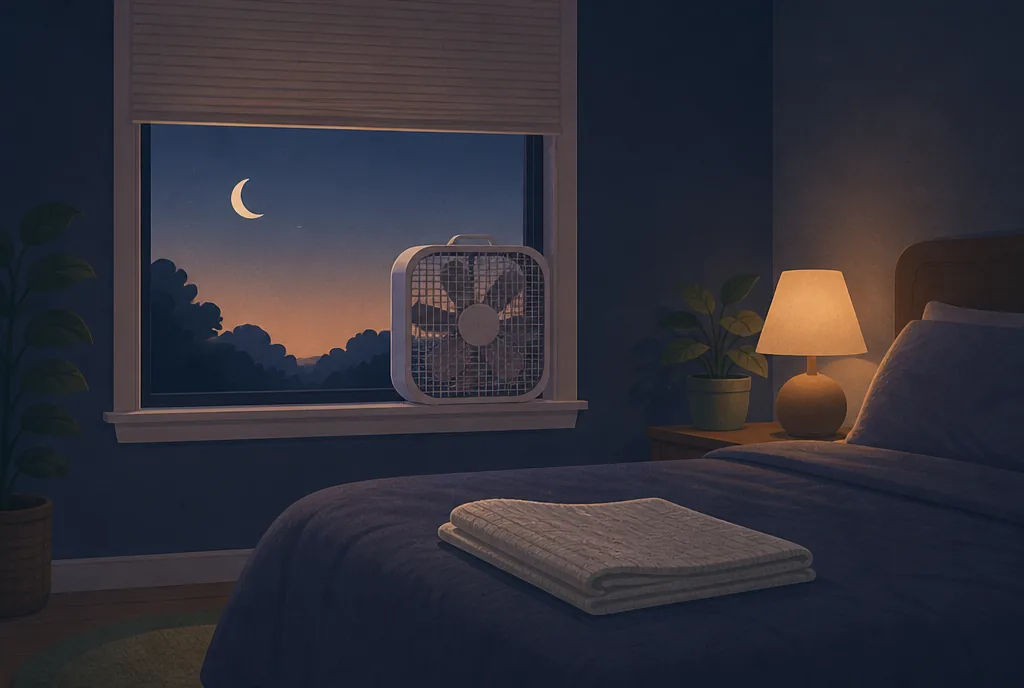
| Air movement | Run a fan; aim it across the bed | Moving air helps sweat evaporate | Low |
| Daytime blinds | Close blinds or curtains on sunny windows | Keeps the room from soaking up heat before bedtime | Free |
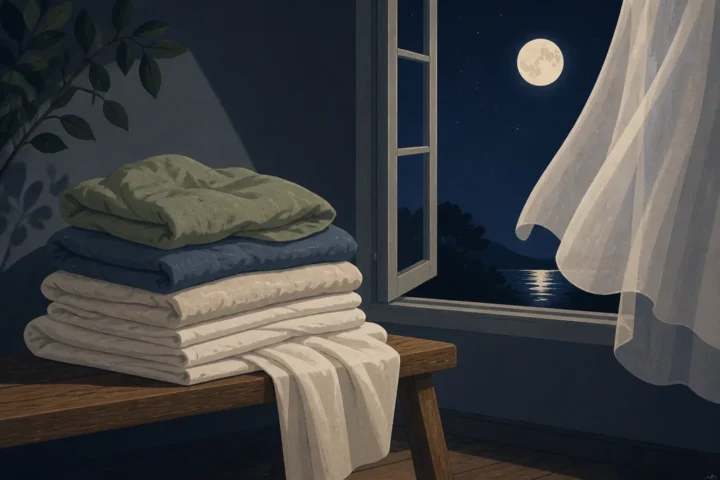
| Layered bedding | Swap one heavy comforter for a sheet plus a light blanket | Lets you adjust in the night instead of waking up hot | Low |
| Sheet fabric | Try cotton or linen instead of polyester-heavy sheets | Small studies suggest fiber type can affect sleep in warm rooms | Medium |
| Warm shower, timed | Shower or bathe 1 to 2 hours before bed | Draws heat to your skin so your core cools afterward | Free |
| Evening triggers | Cut alcohol, caffeine and spicy food late in the day | All three can worsen hot flashes and broken sleep | Free |
Tonight’s cool-down routine
- Close the blinds in the afternoon. A bedroom that bakes in the sun all day stays warm long after dark.
- Drop the thermostat an hour or so before bed. If you have air conditioning, set it toward the 60s. If you don’t, open windows on opposite sides of the house once the outside air is cooler than the inside air, and run a fan.
- Take a warm shower 1 to 2 hours before lights out. Ten minutes is enough. It sounds backward, and it’s covered below.
- Strip the bed down to layers. A top sheet, a light blanket and, if you need it, a duvet folded at the foot of the bed so you can pull it up at 4 am when the room cools.
- Wear less, and wear something breathable. Loose cotton or nothing at all both work. Avoid fleece and tight synthetic fabrics.
- Put cold water by the bed. The National Institute on Aging suggests drinking small amounts of cold water before bed if hot flashes keep you up.
- If you wake up hot, fix it fast. Kick off a layer, flip the pillow, and keep the lights low so you can get back to sleep.
Why heat breaks up your sleep
Your core body temperature drops in the evening as part of how your body starts sleep. To lose that heat, blood moves toward your hands and feet and the heat escapes through your skin. A warm room, a heavy duvet or a mattress that holds heat slows that process down.
A review of thermal sleep research in the Journal of Physiological Anthropology found that in real-life conditions, with bedding and clothes, heat exposure increases wakefulness and decreases slow wave sleep and REM sleep. Humid heat added to the load. Cold rooms, on the other hand, barely changed sleep stages in those studies, as long as people had enough bedding. That’s the practical lesson: it’s easier to add a blanket to a cool room than to sleep well in a hot one.
What’s the best room temperature for a hot sleeper?
Cleveland Clinic sleep psychologist Michelle Drerup suggests 60 to 67°F (15 to 19°C) for adults, along with keeping a fan in the room so you can cool things down quickly. The American Academy of Sleep Medicine just says a comfortable, cool temperature.
If you run hot, start at the low end and adjust a degree or two at a time over a few nights. There’s no single perfect number. The research behind specific settings is thinner than the confident numbers online suggest; our guide to the best temperature for sleep goes through what’s actually known.
Sheets, comforters and blankets for hot sleepers
Bedding is where most people spend money first, and the evidence is honestly thin. A 2024 systematic review in the Journal of Sleep Research found only nine studies comparing fiber types for sleepwear or bedding. A few findings stood out:
- Linen bedsheets improved sleep quality in young adults under warm conditions.
- Wool sleepwear helped older adults fall asleep in warm conditions, which surprises most people. Wool handles moisture well.
- Goose down duvets increased deep sleep, but in cool rooms, not warm ones.
The authors said the studies were too different from one another to rank fabrics with confidence. So treat fabric as a tiebreaker after you’ve fixed the room. Here’s what to look for when you do shop.
- Breathable natural fibers. Cotton (many hot sleepers prefer the crisp feel of a percale weave over silky sateen) and linen are the safe bets. Lyocell and bamboo-derived rayon are popular for their smooth, cool feel.
- Weight you can adjust. Two light layers beat one heavy comforter. Look for “lightweight” or “summer weight” fill.
- Moisture handling. If you sweat, you want fabric that pulls moisture off your skin and dries quickly, not fabric that stays clammy.
- Washability. Sweaty sleepers wash more often. Check that sheets and the blanket can go in a home machine.
- Skepticism about “cooling” claims. Words like “cooling” and “temperature regulating” aren’t standardized. A cool feel at first touch doesn’t mean the fabric stays cool at 3 am.
Your mattress and pillow sit against you all night too, so if the room is cool and the sheets are light and you still wake up sweaty, a mattress topper or pillow that feels warm to you is a reasonable next suspect. Comfort and support still come first.
The warm shower trick
A meta-analysis of 17 studies found that warm water around 104 to 109°F (40 to 42.5°C), taken 1 to 2 hours before bed for as little as 10 minutes, was linked to falling asleep faster and better self-rated sleep. Warming your skin pushes blood toward your hands and feet. Afterward your core temperature falls faster, which is the same drop your body uses to start sleep.
Timing matters. A hot shower right before lights out can leave you warm in bed. If that’s the only time you can shower, make it lukewarm.
Hot flashes and night sweats
For many women in perimenopause and menopause, “sleeping hot” means hot flashes. When they happen at night, the National Institute on Aging calls them night sweats, and it notes they can last for many years. NIA’s first-line suggestions overlap with the routine above: lower the bedroom temperature, layer your bedding so it can be adjusted, use a fan, dress in layers you can remove, and avoid alcohol, spicy food and caffeine.
If lifestyle changes aren’t enough, there are prescription options, both hormonal and nonhormonal, including two that the FDA has approved specifically for menopausal hot flashes. That’s a conversation for your doctor. NIA also warns that supplements like black cohosh and soy isoflavones aren’t proven to work, and some carry risks.
Keep a dry T-shirt, a small towel and water on the nightstand. If a night sweat wakes you, you can change and get back into bed in under a minute without turning on bright lights.
Hot sleeper vs. cold sleeper sharing a bed
Thermostat fights between partners are common, and the bed itself is the easiest place to compromise. Some options:
- Use separate blankets instead of one shared comforter, so each person picks their own weight.
- Set the room for the hot sleeper and give the cold sleeper an extra layer. Adding warmth works better than trying to sleep in heat.
- Point the fan at the warm side of the bed only.
Why you might be sleeping hotter than usual
If you’ve always slept fine and suddenly wake up drenched, look beyond the bedding. The NHS lists the most common causes of night sweats as menopause, anxiety, some medicines (including some antidepressants, steroids and painkillers), low blood sugar, alcohol or drug use, and hyperhidrosis, a harmless condition that makes you sweat a lot. Sometimes the cause is never found.
Alcohol is worth a second look on its own. It’s on that NHS list, and it disrupts the second half of the night even when it helps you drop off. If you wake around 3 am feeling hot, read why you wake up at 3 am.
When to see a doctor
- You regularly wake with soaking-wet sheets, or night sweats keep waking you or worrying you. The NHS says to get that checked.
- Night sweats come with a fever, chills, a cough, diarrhea or weight loss you can’t explain.
- Hot flashes are disrupting your sleep or your days. Effective treatments exist.
- You started a new medication and began sweating at night. Don’t stop it on your own; ask your doctor or pharmacist.
Once the room is cool, the rest of the basics still matter. Run through the sleep hygiene checklist, or browse more setup guides in Bedroom.
Common questions
What temperature should a hot sleeper set the thermostat to?
A Cleveland Clinic sleep psychologist suggests 60 to 67°F (15 to 19°C) for adults. Hot sleepers can start near the low end and adjust a degree or two at a time.
What sheets are best for hot sleepers?
Breathable natural fibers such as cotton and linen are the safest choices. Research on fabrics is limited, but one study in a 2024 review found linen sheets improved sleep in warm conditions.
Why do I wake up hot in the middle of the night?
Common reasons include a warm room or heavy bedding, alcohol, hot flashes, anxiety and some medicines. Regularly waking up in soaking-wet sheets is worth checking with a doctor.
Does a cold shower before bed help you sleep?
A warm shower 1 to 2 hours before bed has better evidence. It draws heat to your skin, and your core temperature drops faster afterward.
Written and checked by the Sleep Brief editors. We base every article on published research and guidance from medical bodies, and link the sources inline. How we research.
This article is for general education and isn't medical advice. If poor sleep lasts more than a few weeks, or you snore loudly, stop breathing in your sleep or feel sleepy while driving, talk to a doctor.