On this page
The short answer After a night shift, go to bed as soon as you get home and protect a fixed 7- to 8-hour block in a very dark, quiet room. Wear sunglasses on the drive home, use caffeine early in the shift rather than late, and take a 20- to 30-minute nap before the first night. Keep days off as close to that pattern as you can.
Your body clock expects you to sleep at night, and daylight keeps telling it so. You can’t fully win that fight while living in a daytime world, but you can stack the odds. The schedules below are examples built from the American Academy of Sleep Medicine’s shift work advice and NIOSH’s guidance for night-shift nurses; adjust the times to your shift and commute.
| Your shift | Main sleep (example) | Nap | Last caffeine |
|---|---|---|---|
| 11 pm to 7 am | About 8:30 or 9 am to 4:30 or 5 pm | Optional 20 to 30 min before leaving for work | Around 2:30 to 3 am |
| 7 pm to 7 am | About 8:30 am to 3:30 pm | 20 to 30 min in late afternoon, if you can | Around 2:30 am |
| Before your first night shift | Normal night’s sleep, then sleep in if you can | A nap in the afternoon before you go in | Use it at the start of the shift |
| Days off | Stay as close to your work-night schedule as your life allows, or go to bed late and sleep late | Not usually needed | Normal daytime use |
The caffeine column assumes you stop roughly 6 hours before your planned sleep, which is the gap one trial found still cost people sleep. More on that below.
The daytime sleep plan, step by step
- Put sunglasses on before you leave work. Morning sunlight tells your brain it’s daytime and pushes back sleepiness. The AASM says sunglasses on your way home can help you fall asleep faster once you get there, and advises avoiding morning sunlight if you need to sleep during the day.
- Go straight to bed. NIOSH’s advice is to go directly to bed when you arrive home and not use the early morning for chores or errands. Its reasoning: the more sleep you get before 2 pm, the better rested you’ll be, because your body’s natural alerting signal starts working against you in the afternoon.
- Eat small, if at all. If you haven’t eaten in hours and will wake up hungry, NIOSH suggests a small snack with some protein and carbohydrate, like cereal and milk, before bed.
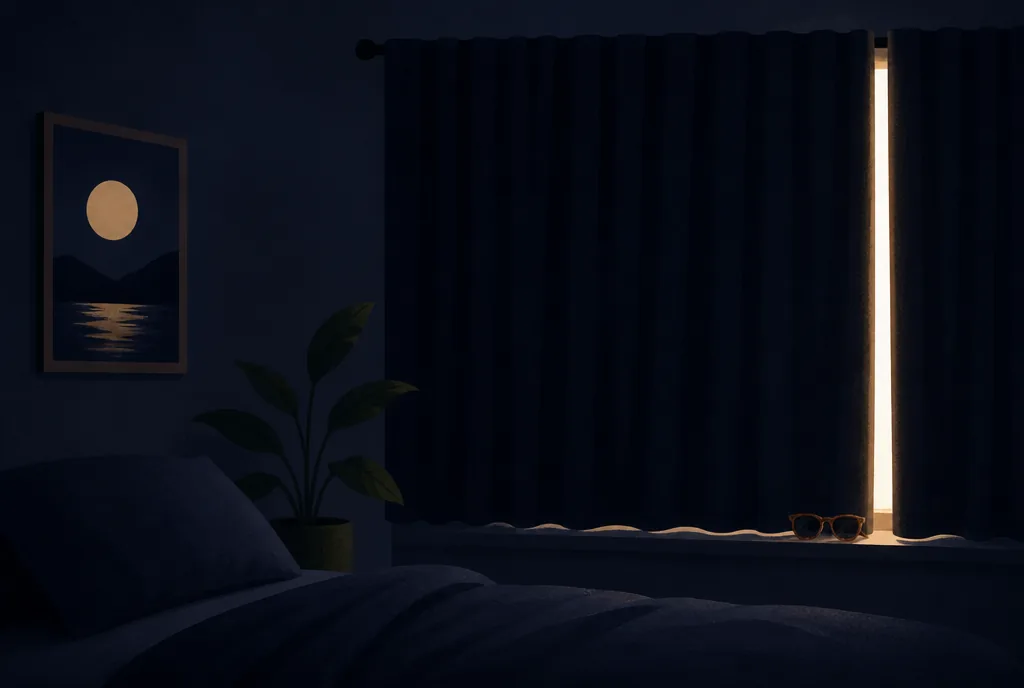
- Make the room truly dark. Block every window in the bedroom and the bathroom, plus the path between them, or wear an eye mask. If you have to get up, NIOSH suggests a dim red nightlight instead of the overhead light.
- Kill the noise. Earplugs or a white noise machine cover daytime sounds. Silence your phone, and tell the people you live with when you sleep. The AASM specifically recommends making sure others in your home keep the home quiet during your sleep hours.
- Nap before you go back in. If you can’t get a full block, split it: a main sleep in the morning and a short nap before your shift. Even a nap of 20 to 30 minutes can improve your alertness on the job, according to the AASM. The nap calculator works out the alarm time.
- Front-load caffeine. Moderate caffeine early in the shift helps. Stop in the later part of the shift so it isn’t still working when you need to sleep.
- Get bright light at the start of the shift. Bright light early in the shift helps shift your clock toward night work. The AASM notes that light therapy is used usually at the beginning of your shift, and a sleep doctor can help you time it.
How many hours should a night shift worker sleep?
The same as anyone else. The CDC’s recommendation for adults is 7 or more hours, and night work doesn’t change that. The trouble is getting it: the AASM says people with shift work disorder may sleep up to four hours less than the average worker.
If one daytime block keeps ending at 1 pm no matter what you do, count the pre-shift nap as part of your total. Two pieces adding up to 7 hours beat one 5-hour block. See how much sleep you need by age for the full table.
Caffeine timing on nights
Caffeine lingers longer than most people think. In a trial where people took 400 mg of caffeine (about four cups of coffee) at different times before bed, even the dose taken 6 hours before bedtime cut objectively measured sleep by more than an hour. The authors backed a minimum 6-hour gap for substantial amounts.
For an 8:30 am bedtime, that puts a sensible cutoff around 2:30 am. A small cup later in the shift will cost less than a big energy drink. Our caffeine calculator estimates how much is still in your system at bedtime, and how long caffeine stays in your system explains why the answer varies so much between people.
What to do on your days off
This is the hardest part, and there are two defensible approaches.
Stay on your work schedule. The AASM suggests trying to keep the same schedule on workdays and days off, because a steady routine helps your body know when to be alert. This works best if you’re on nights for long stretches and your household can live with it.
Use a compromise schedule. Most people want to see daylight and family on days off. Circadian researchers designed a middle position: during night shifts, people got bright light pulses at work, wore dark sunglasses outside, and slept in dark bedrooms at set times; on days off they went to bed late and slept late, with some afternoon outdoor light. Their body clocks moved partway toward night work, and those who reached that target performed better on night shifts while still getting enough daytime sleep after work and late-night sleep on days off. It was a small lab-and-home study of 19 people, but it’s a practical template.
What usually backfires is flipping fully back to a 10 pm bedtime on Saturday and then trying to sleep at 9 am on Monday.
Switching onto nights or rotating shifts
Shift gradually when you can. The AASM gives an example of moving from an evening shift (5 pm to 1 am) to a night shift (11 pm to 7 am) by pushing sleep two hours later each day:
| Day | Sleep time |
|---|---|
| On evening shift | 3 am to 11 am |
| Transition night 1 | 5 am to 1 pm |
| Transition night 2 | 7 am to 3 pm |
| Transition night 3 | 8 am to 4 pm |
| On night shift | 9 am to 5 pm |
If you rotate, ask for a clockwise rotation, where each new shift starts later than the last (days, then evenings, then nights). It’s easier to stay up later than to fall asleep earlier.
Does melatonin help night shift workers sleep?
Modestly. A review of trials in shift workers found that melatonin was linked to about 24 minutes more daytime sleep after a shift, but it didn’t help people fall asleep faster, and the evidence was low quality. The same review found no clear benefit from prescription sleeping pills such as zopiclone.
The AASM says research suggests a small dose is just as effective as higher doses, and that melatonin should be taken several hours before you plan to sleep. Timing matters, and the wrong time can push your clock the wrong way, so ask your doctor or pharmacist before you start, especially if you take other medicines. Our melatonin dosage guide covers what studies used.
Getting home safely
The drive home after a night shift is one of the riskiest parts of the day. The AASM suggests arranging a ride, a bus or a cab after night shifts, because drowsy driving puts you and everyone else on the road at risk. If you have to drive and your eyes are closing, pull over somewhere safe.
If you’ve nodded off at the wheel or had a near miss on the way home, treat that as a medical issue, not a willpower problem. Talk to your doctor and your employer about your schedule.
Is it shift work disorder?
Most people struggle for the first few weeks on a new shift. Shift work disorder is when it doesn’t settle. The AASM’s self-test asks four questions:
- Does your schedule require you to work when you’d normally sleep?
- Do you have trouble sleeping, or are you severely tired, because of your work schedule?
- Has this gone on for at least one month?
- Is it hurting your social, family or work life?
A yes to all four suggests you might have shift work disorder, and a sleep center can help. One clinical review estimates that about 10% of shift workers have it.
When to see a doctor
- You’ve answered yes to all four questions above.
- You feel tired even after 7 to 8 hours of sleep, or you’re nodding off at work or behind the wheel.
- You’re relying on alcohol or sleeping pills to get to sleep after shifts.
- You snore loudly or someone has noticed pauses in your breathing. Sleep apnea can hide behind “it’s just the night shift.”
For the gear side of daytime sleep, see how to choose a sleep mask and foam vs silicone vs wax earplugs, or browse more in Life Situations.
Common questions
What is the best sleep schedule for night shift workers?
Go to bed soon after you get home and keep a fixed 7 to 8 hour block, ideally finishing most of it by early afternoon. Add a 20 to 30 minute nap before your shift if the main sleep runs short.
Should I sleep right after a night shift or before the next one?
NIOSH advises going straight to bed when you get home, since the more sleep you get before 2 pm, the better rested you'll be. A short nap before the next shift can top you up.
How do night shift workers sleep on days off?
Either keep the same schedule, which the AASM suggests, or use a compromise: go to bed late and sleep late on days off rather than flipping back to a normal bedtime.
Can melatonin help after a night shift?
Modestly. Trials in shift workers linked it to about 24 more minutes of daytime sleep, but not to falling asleep faster, and the evidence is low quality. Ask your doctor or pharmacist about timing first.
Written and checked by the Sleep Brief editors. We base every article on published research and guidance from medical bodies, and link the sources inline. How we research.
This article is for general education and isn't medical advice. If poor sleep lasts more than a few weeks, or you snore loudly, stop breathing in your sleep or feel sleepy while driving, talk to a doctor.